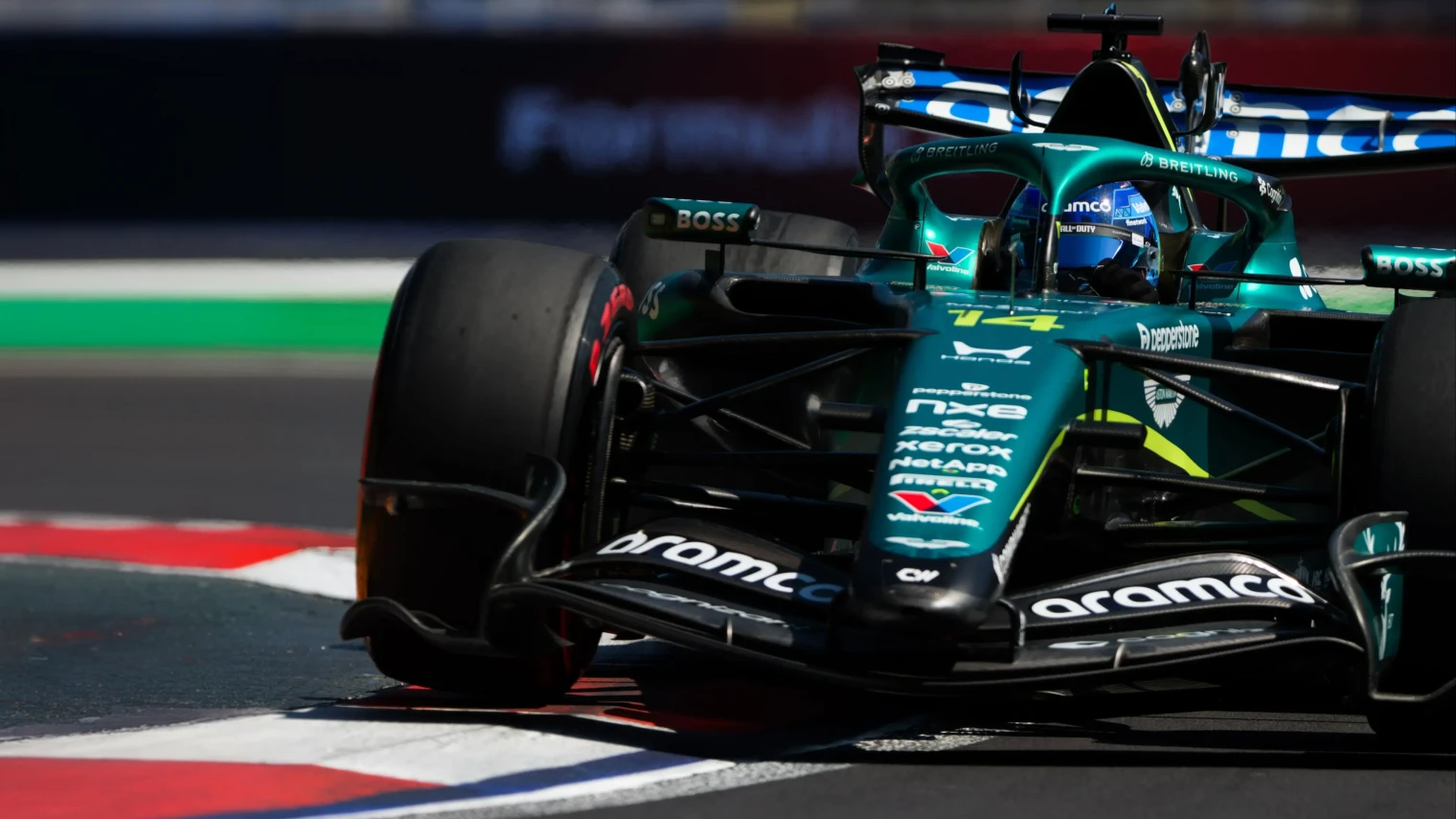
In F1® aerodynamics, the wind tunnel and the track never fully agree. Picture the first laps of Friday practice. The car rolls out with a setup chosen days earlier based on wind tunnel data: a floor, a front wing flap angle, a ride height, etc. Within a few corners, the driver tells the race engineers how it feels, and the sensors record how much downforce and drag the car is really producing. When those numbers don't match the prediction, the team spends precious time finding out why.
The goal for CoreWeave and Aston Martin Aramco was to shrink that discovery period. A machine learning model built by CoreWeave with the Aston Martin Aramco Formula One™ Team now predicts that gap before the car turns a wheel, reducing the error in predicting on-track aerodynamic performance from wind tunnel data by 50%.
Why the wind tunnel and the track disagree
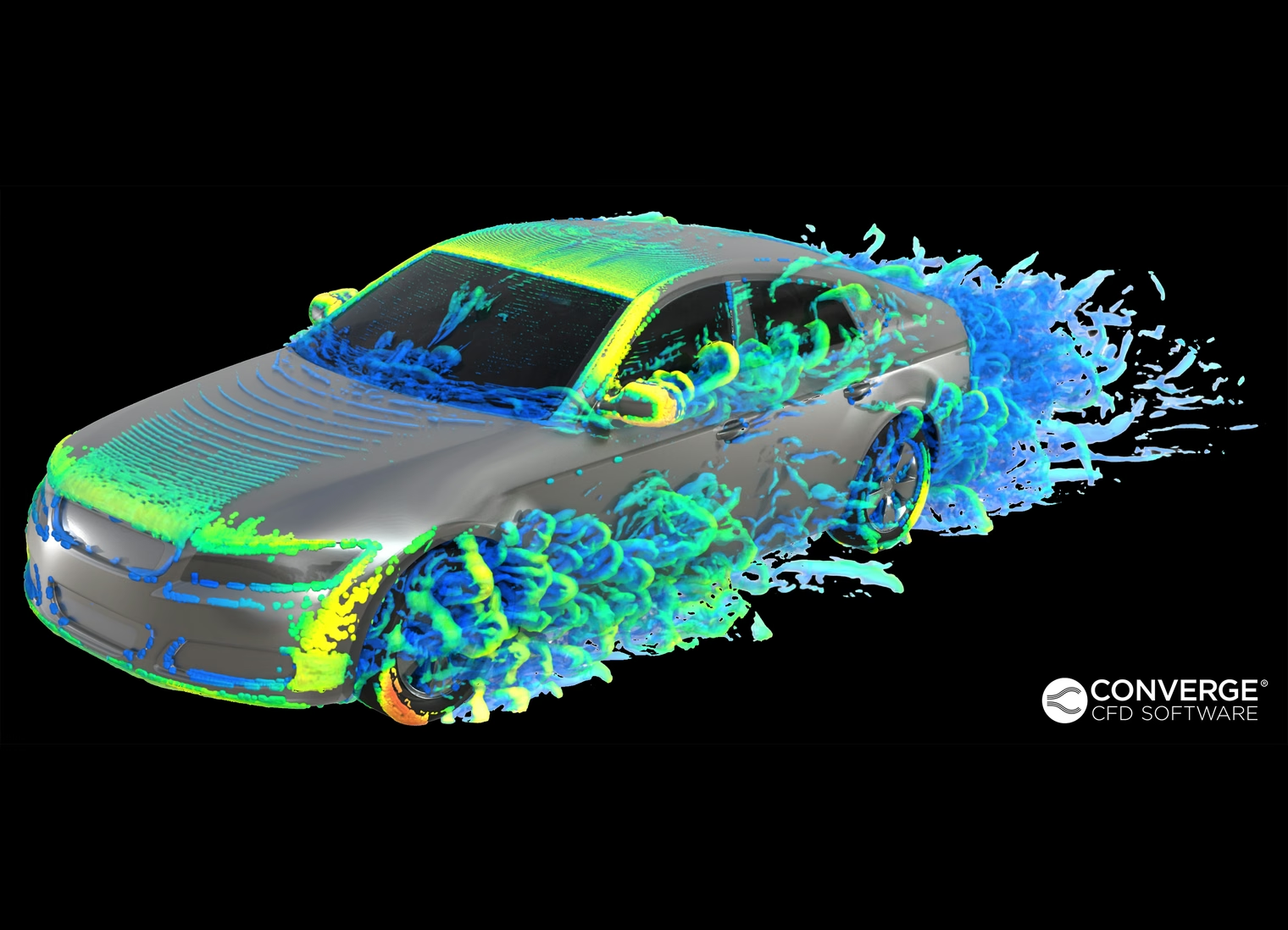
Downforce and drag are the two measurements that define a car's aerodynamic performance. The CoreWeave AI.R Tunnel at the AMR Technology Campus in Silverstone measures those precisely, component by component. It's the tool the team trusts to decide which front wing, which floor, and which configuration go on the car.
A wind tunnel is an idealized scenario. On track, downforce changes constantly with speed, under braking, through corners, over curbs of different heights, and while accelerating out of a slow turn. Track surface and temperature vary from one circuit to the next. Running in the dirty air behind another car changes how the aerodynamics behave again.
Engineers call the difference between prediction and reality the delta. Each race weekend opens with a learning period to find the car's true performance at that circuit. What the team learns in that window shapes setup optimization, its understanding of how the aerodynamics behave on track, and the correlation of its Driver-in-the-Loop simulator.
Why knowing the delta changes the setup
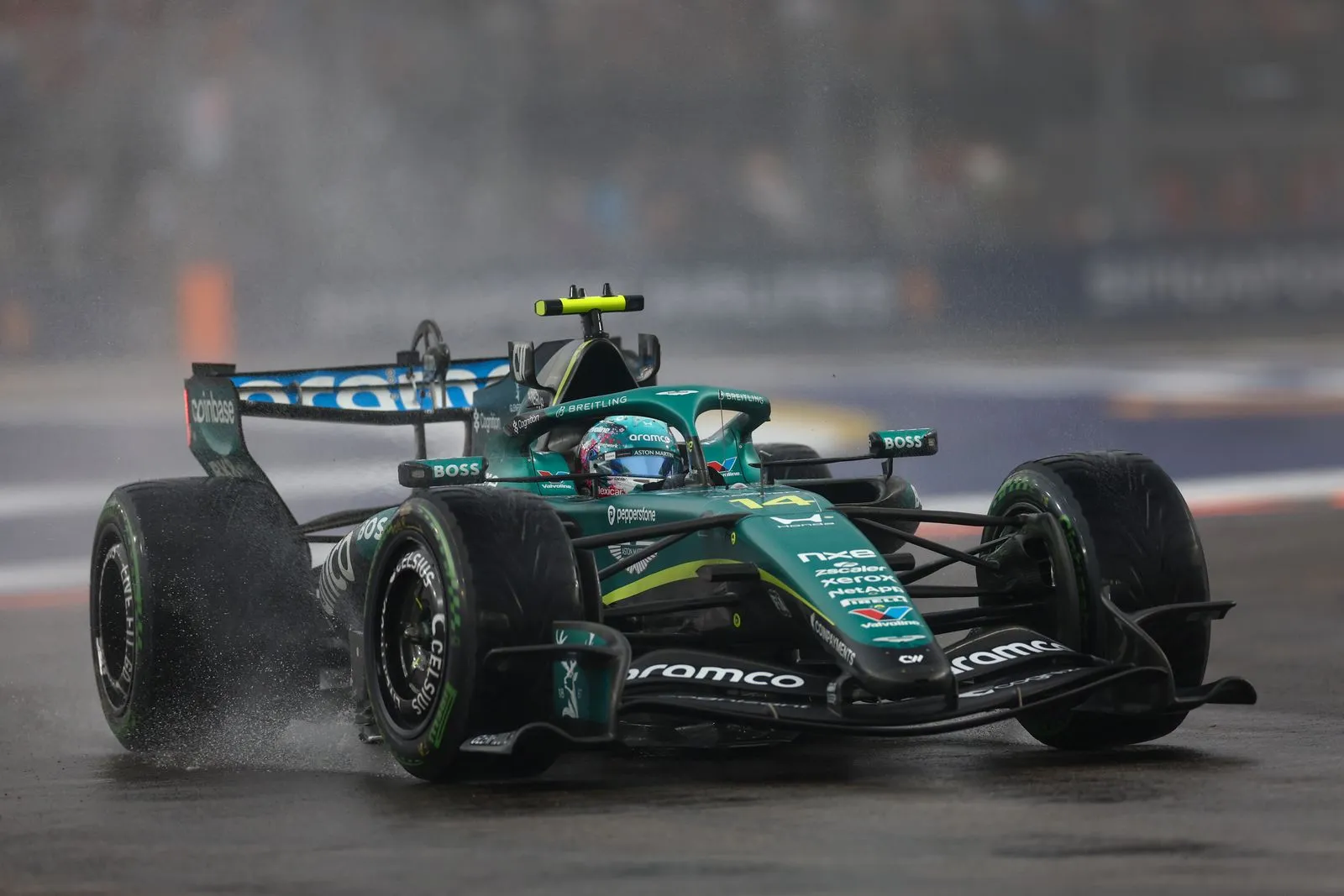
If the team knows a component will produce less downforce on track than the tunnel says, it can account for that before the car leaves the factory. A circuit that rewards high downforce needs a high-downforce setup. Knowing the real-world value of each component, such as the floor or the front wing, lets engineers calibrate their choices for that specific track.
Why a small, noisy dataset makes this hard
The car carries sensors that capture wind speed, car velocity, steering angle, ride height, and more, all of which influence how much downforce and drag the car generates. Live telemetry streams at 100Hz, which sounds like plenty of data until you look at what's usable.
Real-world sensor data is noisy. Roll over a curb, and the reading jumps. To find the true patterns, the signals have to be downsampled, and what remains from each race weekend is a small dataset. With 24 races in a season, the team gets a limited number of chances to learn.
How CoreWeave and Aston Martin Aramco built a model that predicts the delta
CoreWeave's Physical AI Field Engineering team worked side by side with Aston Martin Aramco's Vehicle Science team for six weeks, delivering the model ahead of the 2025 season finale in Abu Dhabi. Through the 2026 season, the team has used it in the week before each race to guide setup.
The work started with learning how setup decisions actually get made. The Vehicle Science engineers knew which signals mattered, and CoreWeave built the pipeline around them. The two teams did the feature engineering together, and that joint work is what made a small dataset usable.
From there, the team worked through the approaches you'd expect for a problem like this: starting with statistical methods and then classical modeling techniques. The surprise was that a novel modern modeling approach outperformed both. With careful evaluation and features chosen together with the Vehicle Science engineers, it predicted the delta better than the team's existing solution.
The result is a 50% reduction in error when predicting the car's on-track aerodynamic performance from wind tunnel data, checked against its aerodynamic sensors on track.
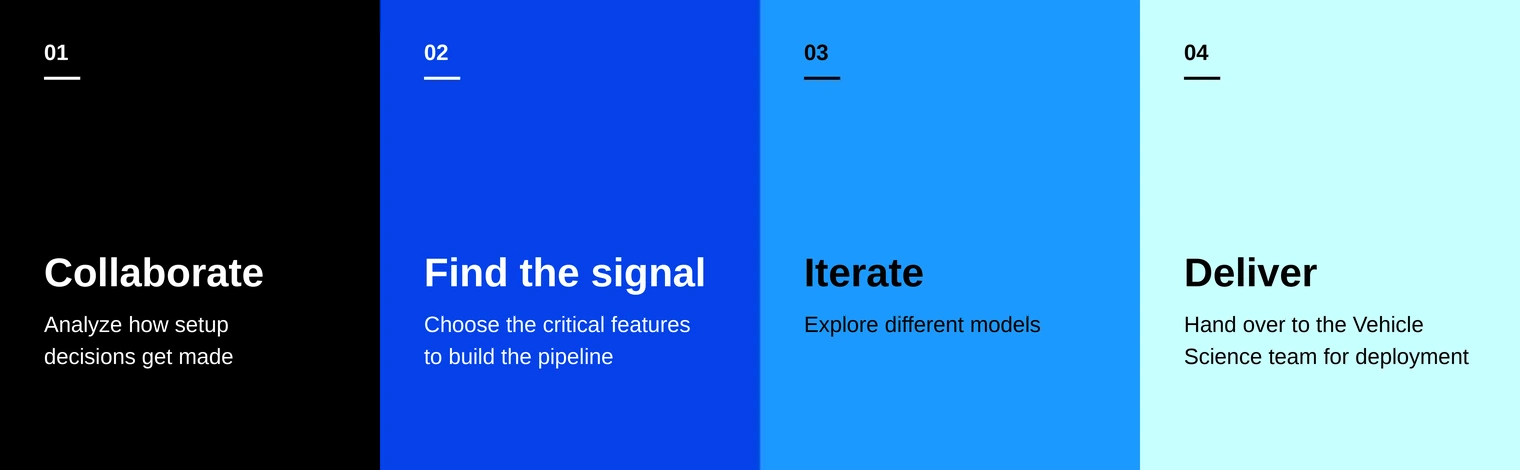
Aston Martin Aramco kept the pipeline. The Vehicle Science team now has a modern machine learning workflow it can retrain and extend, and every race weekend adds data that sharpens the next prediction.
From Friday discovery to race-week preparation
Before this project, the team discovered the car's true aerodynamic performance during Friday practice and adapted from there. Now, in the week before a race, engineers use the model's predicted delta for that circuit to guide component choices and setup. The car arrives with a calibrated prediction for that track, and practice time goes into refining the setup.
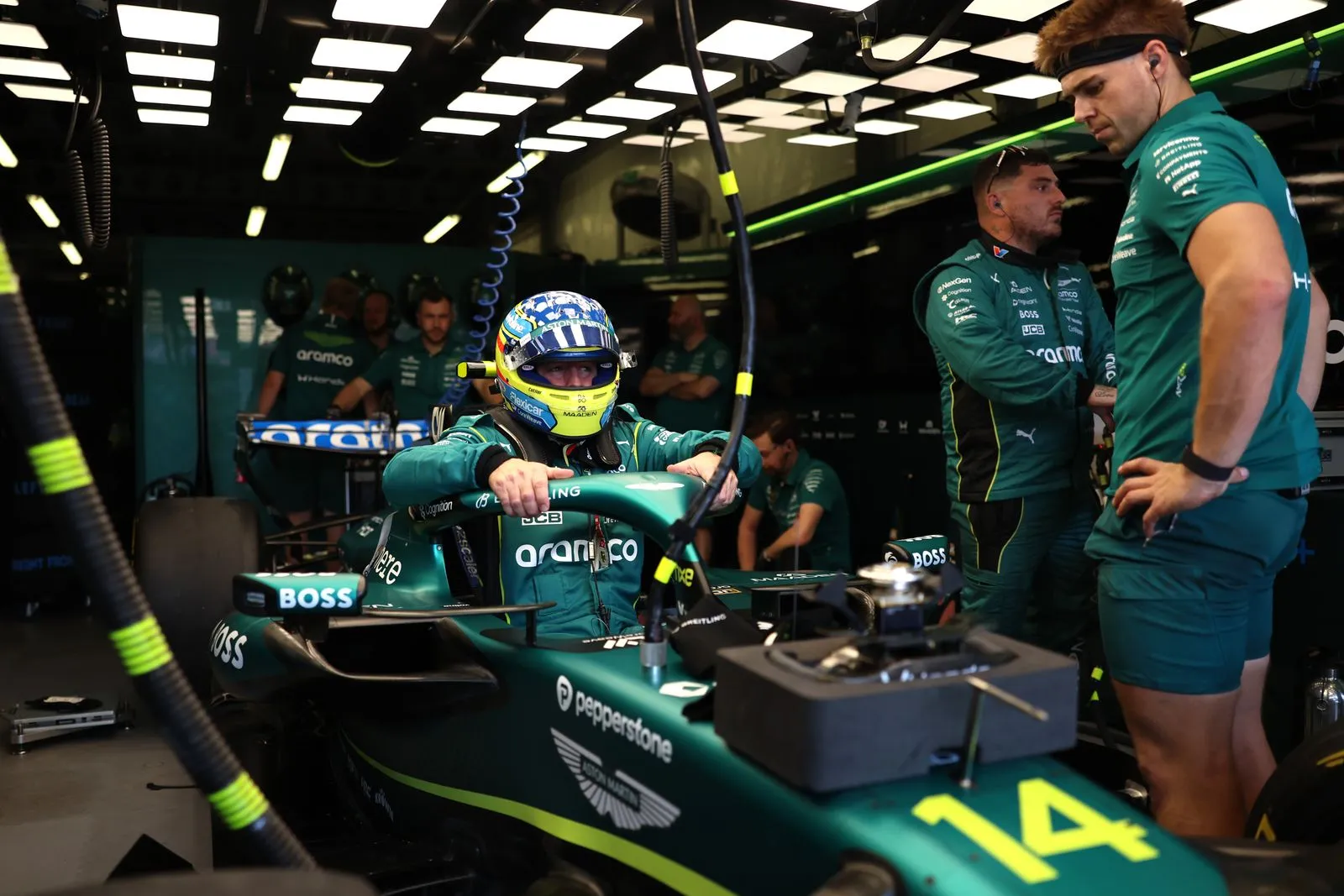
"The wind tunnel will always be our reference, but the track is where performance is decided," said Enrico Cardile, Chief Technical Officer, Aston Martin Aramco Formula One™ Team. "Working with CoreWeave's engineers, we now arrive at each circuit with a clearer picture of how the car will behave there, so practice goes into refining the setup instead of discovering it."
How CoreWeave makes it possible
Small, noisy datasets are where many machine learning projects stall, and they're the norm in engineering, where a team can only build and test a handful of designs. CoreWeave's Physical AI Field Engineering team builds physically meaningful machine learning models that work on data volumes like these. Its engineers have backgrounds in automotive, aerospace, and industrial AI, and embed directly with customer engineering teams to get models from simulation and test into the real world.
In Formula 1®, that means working to the race calendar. Deadlines are set by the next Grand Prix, and they don't move.
Experiments were tracked in Weights & Biases Models, so every approach, from the statistical baselines to the final model, could be compared and reproduced before the team committed to it.
What F1® aerodynamics teaches physical AI beyond race day
The gap between a controlled test and the real world isn't unique to Formula 1®. Every engineering team that relies on a test rig, a simulator or a wind tunnel faces a version of it, and most work with real-world data that is smaller and messier than they'd like. This project shows how far a small, noisy dataset can go when domain experts and machine learning engineers choose the features together.
The same approach applies wherever a prediction has to hold up against physical reality, from calibrating simulators against field data to cutting the number of physical tests a new design needs.
Formula 1® is decided at the margin, and the gap between wind tunnel and track is one of them. Closing it before Friday practice gives Aston Martin Aramco engineers more practice time to find the next tenth.
CoreWeave and Aston Martin Aramco are building that advantage together through AI.R, their shared AI research program. Learn more today:
- Read how AI agents on CoreWeave help Aston Martin Aramco process F1® radio in near real time
- See how Caterpillar is building autonomous construction machines with CoreWeave
- Explore how CoreWeave supports physical AI, from large-scale simulation and model training to deployment and validation