Until recently, AI agents were built and trained by running lengthy offline evaluations against labeled datasets, making improvements, and repeating the cycle until key metrics such as quality, accuracy, cost, and style fell within acceptable ranges. Only then were agents shipped to production for inference where they encountered real user scenarios. This approach was not only slow but resulted in poor reliability or even failure, since labeled datasets cannot practically cover every real-world scenario.
AI moves too fast for this approach to scale. What if you could launch agents into production immediately and have them improve autonomously as they operate in the real world? Until now, there was no platform built to make that possible.
CoreWeave announced the launch of unified agentic AI capabilities that turn high-quality production data into signals that autonomously improve agent reliability over time.
Now teams can put agents in production from day one and let production signal drive improvement. To implement the superintelligence loop, CoreWeave brings together serverless reinforcement learning (RL), production inference at scale, fleet-wide observability for agents and infrastructure, and autonomous improvement to continually boost agent reliability using real-world data.

Train agents for reliability
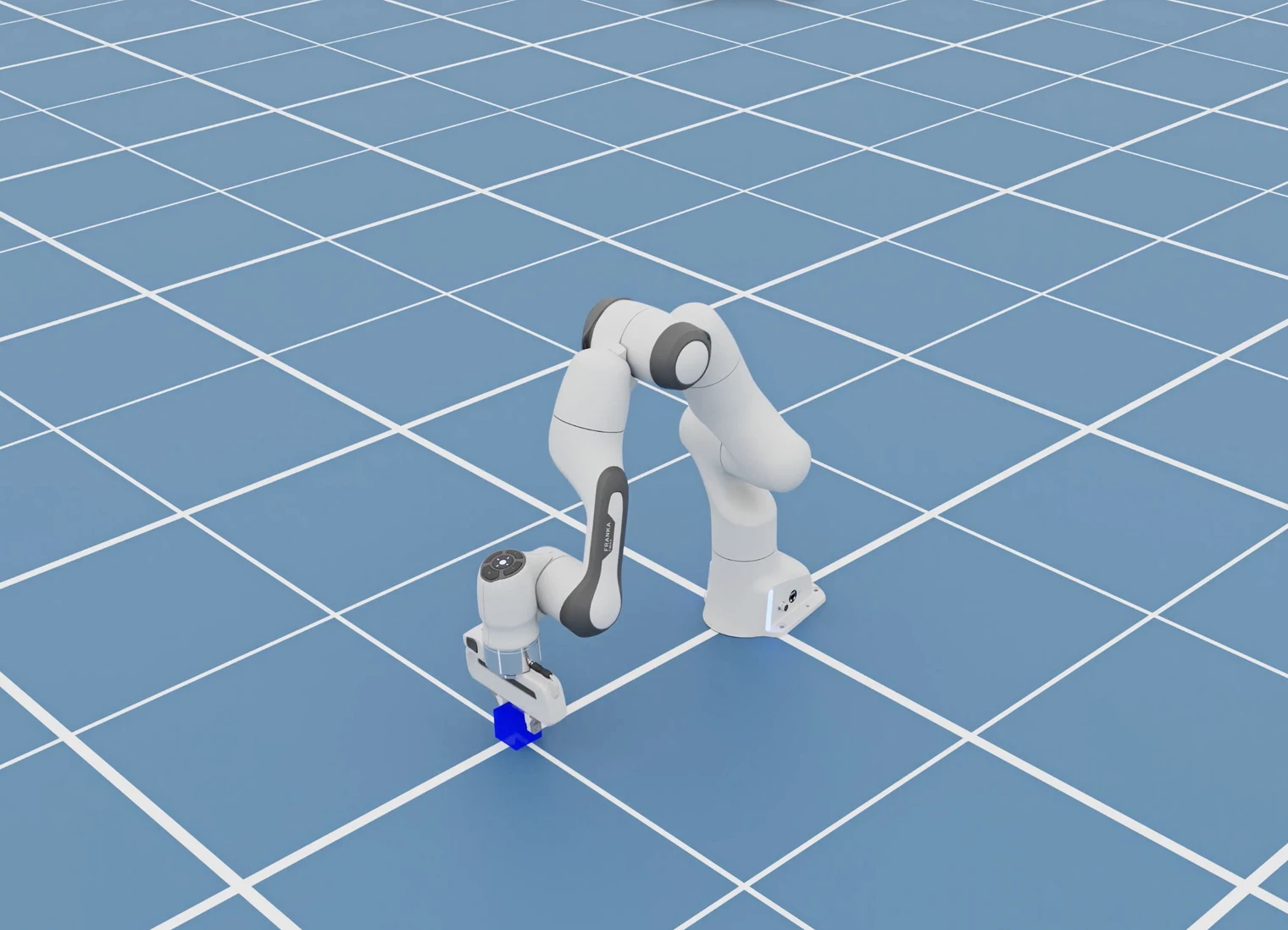
Production agents need reliability beyond what out-of-the-box models can deliver. Reinforcement learning (RL) is how you get there. RL helps agents learn by interacting with an environment and receiving feedback in the form of rewards or penalties. Over time, the agent discovers which actions maximize long-term rewards, allowing it to improve through trial and error rather than explicit instruction. Until now, RL has been out of reach for most enterprises because it’s both advanced and GPU-intensive.
CoreWeave offers Serverless RL to post-train LLMs for reliability on multi-turn agentic tasks without requiring teams to provision and manage infrastructure. With Serverless RL, users get instant access to powerful CoreWeave compute. The service elastically scales with training workloads: up when needed and down to zero when idle, helping teams avoid unnecessary spend and the “left it on” headache. CoreWeave fully manages and maintains the infrastructure, keeping jobs resilient so teams can focus on training instead of babysitting compute clusters.
The Serverless RL backend on CoreWeave Cloud packs jobs to maximize utilization, reducing costs by up to 40% and accelerating training by approximately 1.4x with no loss in quality. Rollouts run on a shared GPU cluster with per-token billing.
RL training is not fire-and-forget; it is iterative. On local infrastructure, this loop can be painfully slow. With Serverless RL, training and inference run on separate always-on CoreWeave instances, so edits to rollout or training loops apply in seconds rather than minutes.

Run agents with production inference
Unlike traditional software paradigms, where development and production were separate, AI agent training and inference operate in a tightly coupled loop. But integration alone is not enough. The inference layer must deliver reliable performance, execution clarity, and operational consistency so production behavior can generate usable signals for improvement. Without that foundation, feedback loops weaken, iteration slows, and the gap between research and production persists.
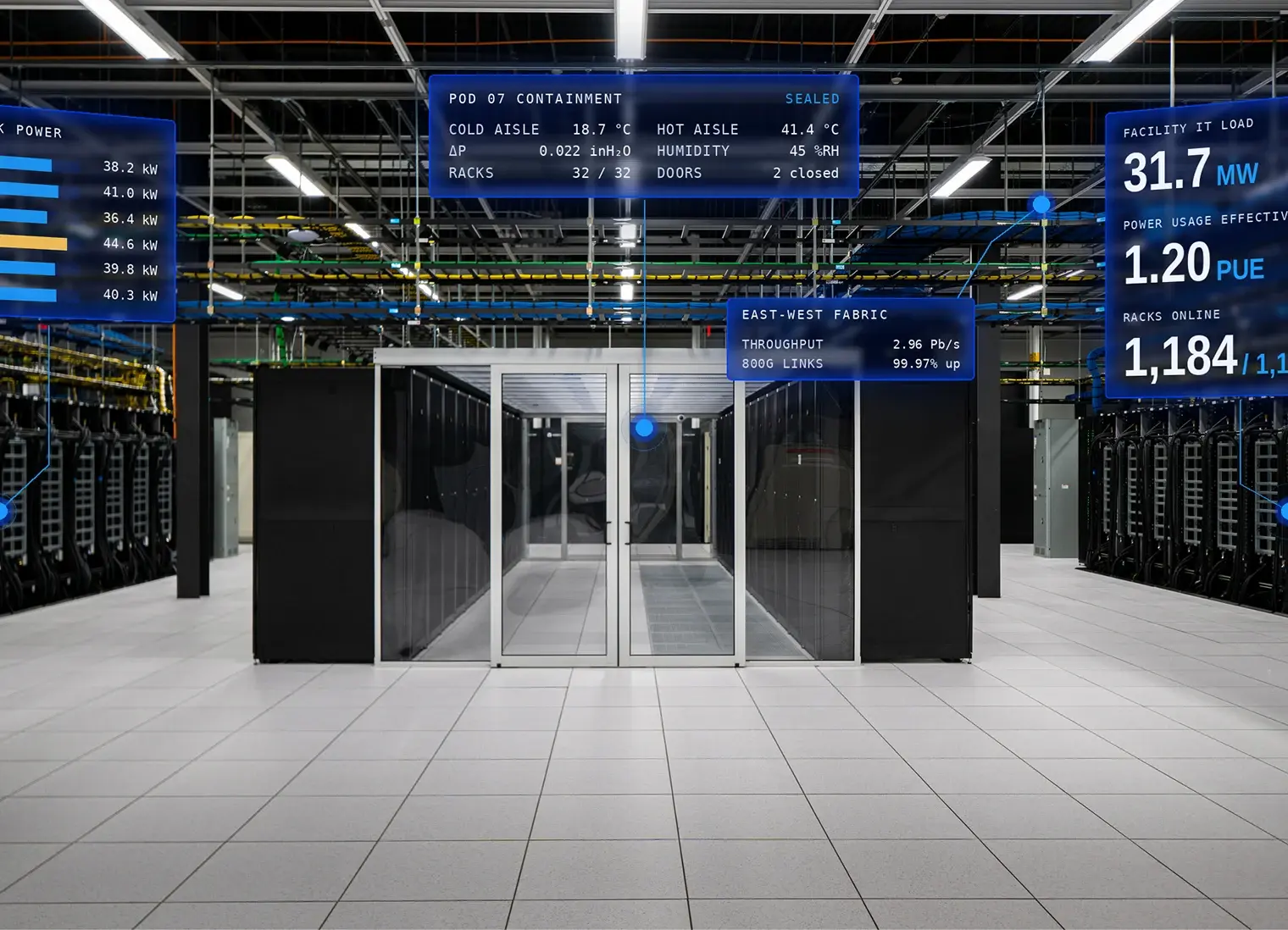
CoreWeave Cloud provides purpose-built AI infrastructure for this continuous cycle with CoreWeave Inference supporting the production execution layer. Inference workloads operate predictably across both single-node and multi-node deployments, maintaining stable behavior as scale and concurrency increase. Across Serverless Inference, Dedicated Inference, and Inference on CKS, teams can choose the right inference flavor for their workload while preserving clarity into performance behavior, runtime needs, capacity model, and deployment approach. Built-in monitoring surfaces inference performance, scaling behavior, and system health, enabling teams to detect issues early and maintain production SLOs at scale.
Observability for production agents
W&B Weave provides end-to-end observability to monitor production agents, out-of-the-box signals to surface failure modes, and a flexible evaluation framework to prevent regressions.

Built-in and custom signals automatically capture and classify user interactions, so you always know how your agents are behaving. Alerts route important events through Slack notifications and trigger webhook automations, turning every production insight into a fast iteration cycle.
Weave organizes multi-agent traces into sessions and turns from the ground up. That structure, paired with native analytics tools, makes it easy to trace behavior across multi-agent systems and pinpoint root causes of failure modes that would otherwise remain buried in raw logs.
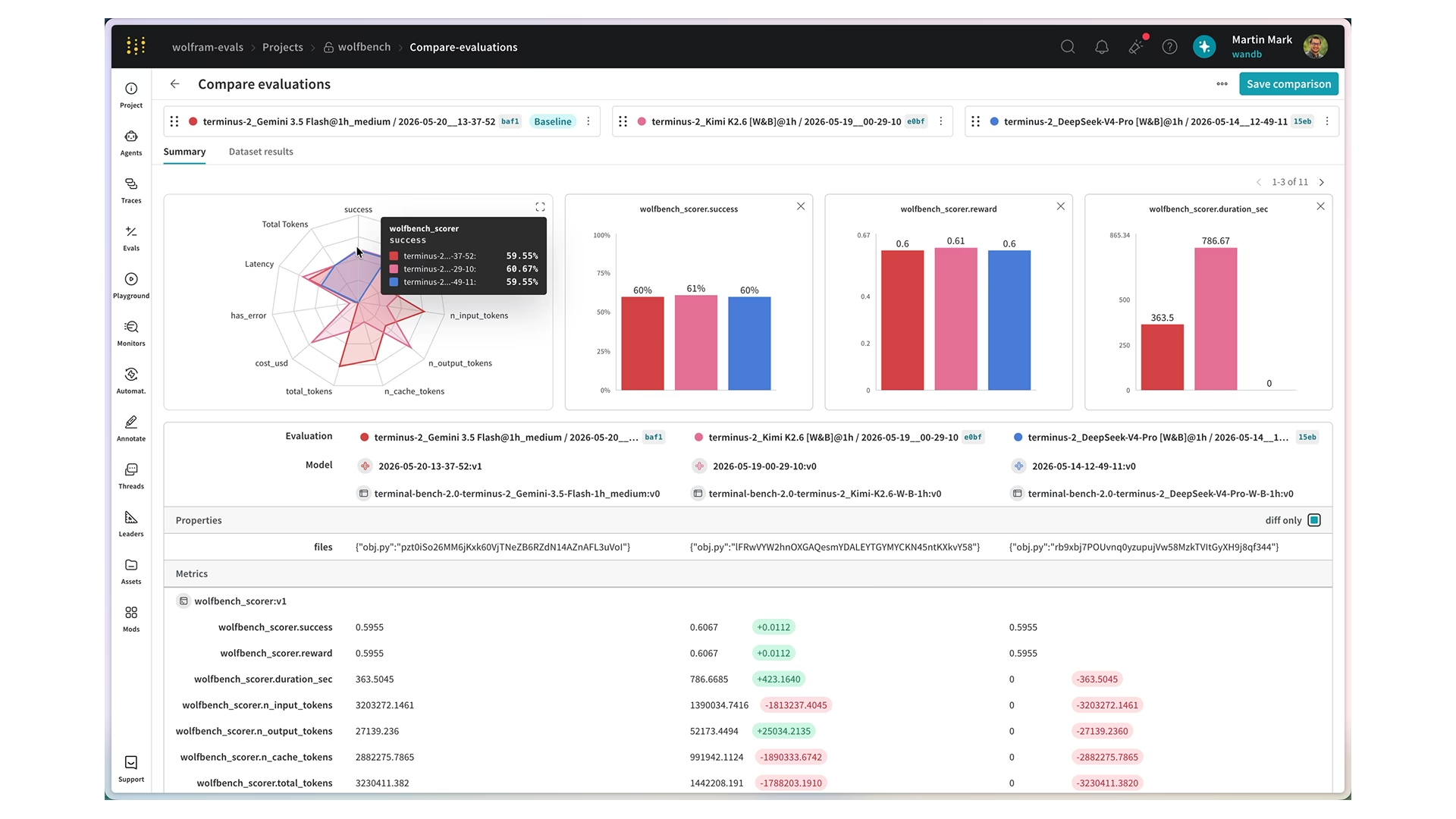
The imperative evaluation API enables measuring every harness and model improvement with confidence. Weave provides powerful evaluation comparisons and visualizations to catch regressions before they reach users and keeps the iteration loop linear.
Autonomous improvement
W&B Skills and MCP server turn general-purpose coding agents into AI researchers and agent builders that work around the clock to help you create reliable agents autonomously. W&B Skills make your coding agent instantly fluent in W&B’s best-in-class AI tools for experiment tracking, model management, tracing, evaluations, and monitoring. You can let your agent run thousands of experiments around the clock and reach production-grade reliability weeks sooner. The MCP server provides the tools and resources to access data and run experiments with Weights & Biases.
Close the loop
The gap between development and production has always been where agent projects stall. CoreWeave closes it. Improve automatically, and build systems that compound. Enterprises that successfully close the loop will deliver the most reliable agents to users.
Learn more about agentic workflows.